Summary of our Research
Our laboratory is dedicated to the creation of novel polymeric materials and the exploration of their practical applications, based on advanced concepts in organic synthesis.
By integrating computational and experimental chemistry, we investigate reaction mechanisms and predict material properties, enabling the rational design of efficient synthetic processes and the optimization of material performance.
Our research contributes to the development of environmentally sustainable materials, biomaterials, and energy-related technologies, with the ultimate goal of advancing a sustainable society.
Research Topic
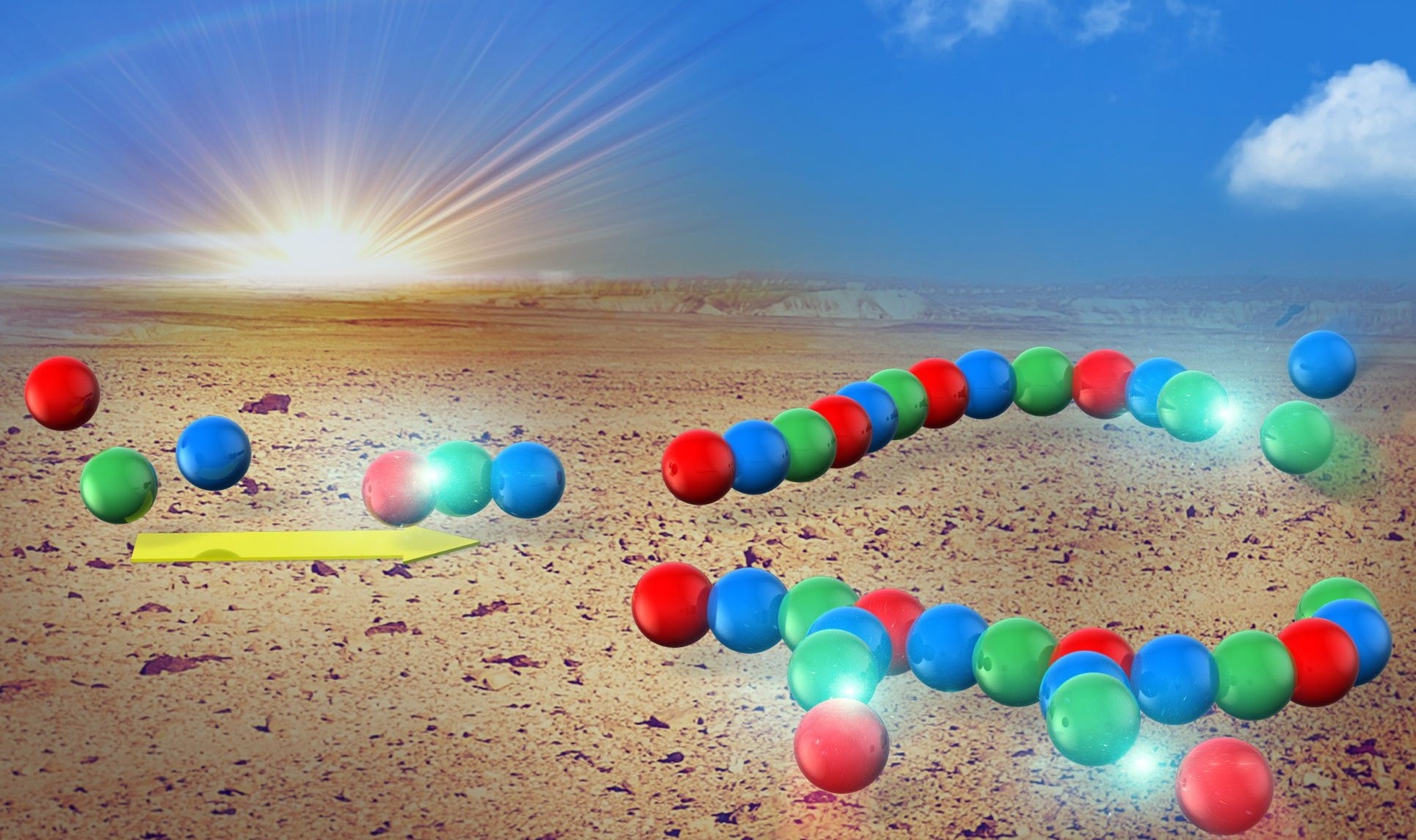
① Polymer Synthesis via
Multicomponent Reactions
One-pot synthesis from three or
more starting materials for sustainable & efficient development
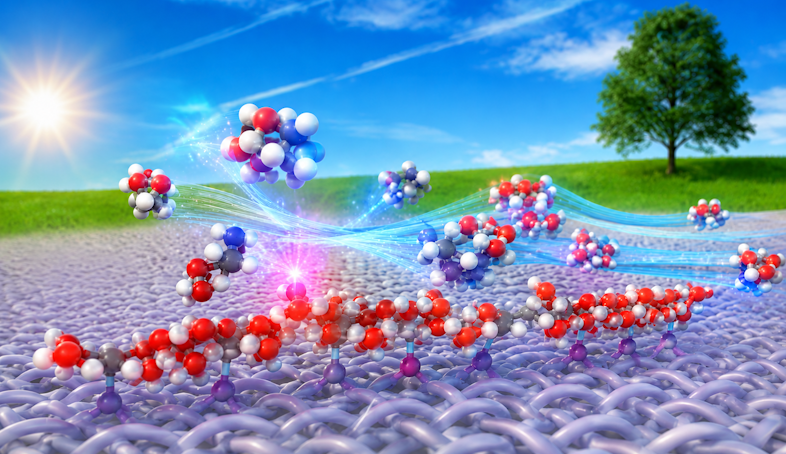
② Surface Functionalization
of Polymeric Materials
Design and development of novel
surface-modification strategies
through collaborative research
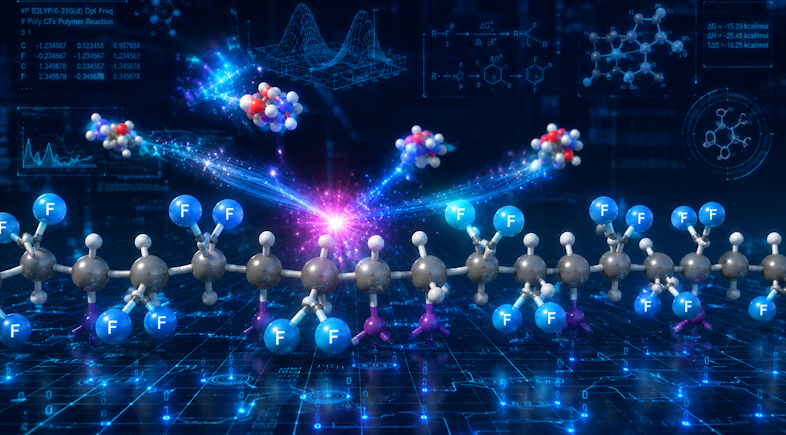
③ Advanced Polymer Reactions Involving Fluorine
Design and synthesis of novel polymers through fluorine incorporation & exploration of unique polymer reactivity
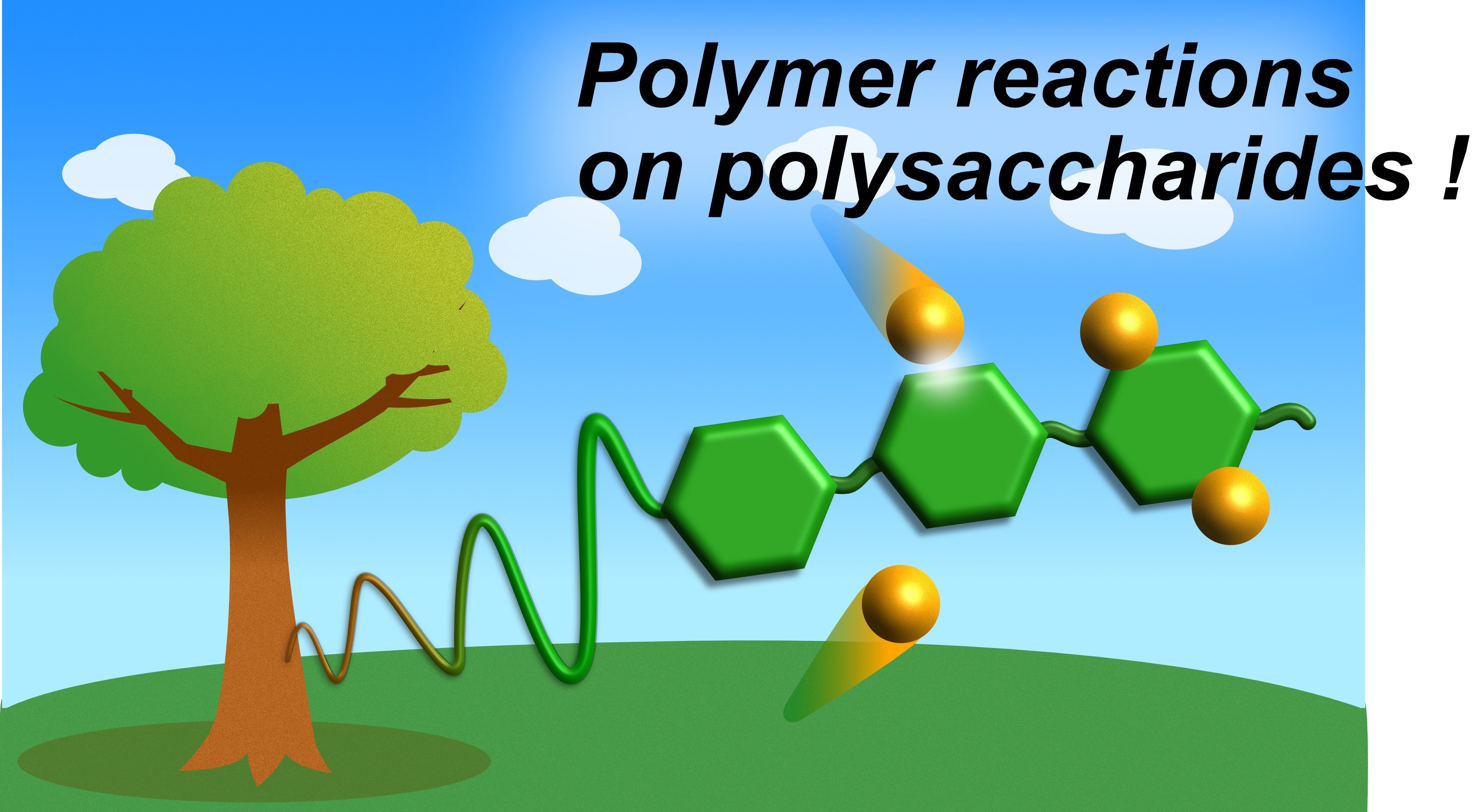
④ Sustainable Materials from Biomass Resources
Design and synthesis of
innovative materials utilizing
renewable biomass resources
⑤ Development of Novel
Zwitterionic Polymers
Advancement of functional polymeric materials
through domestic and international
collaborative research
①Polymer Synthesis via Multicomponent Reactions
-
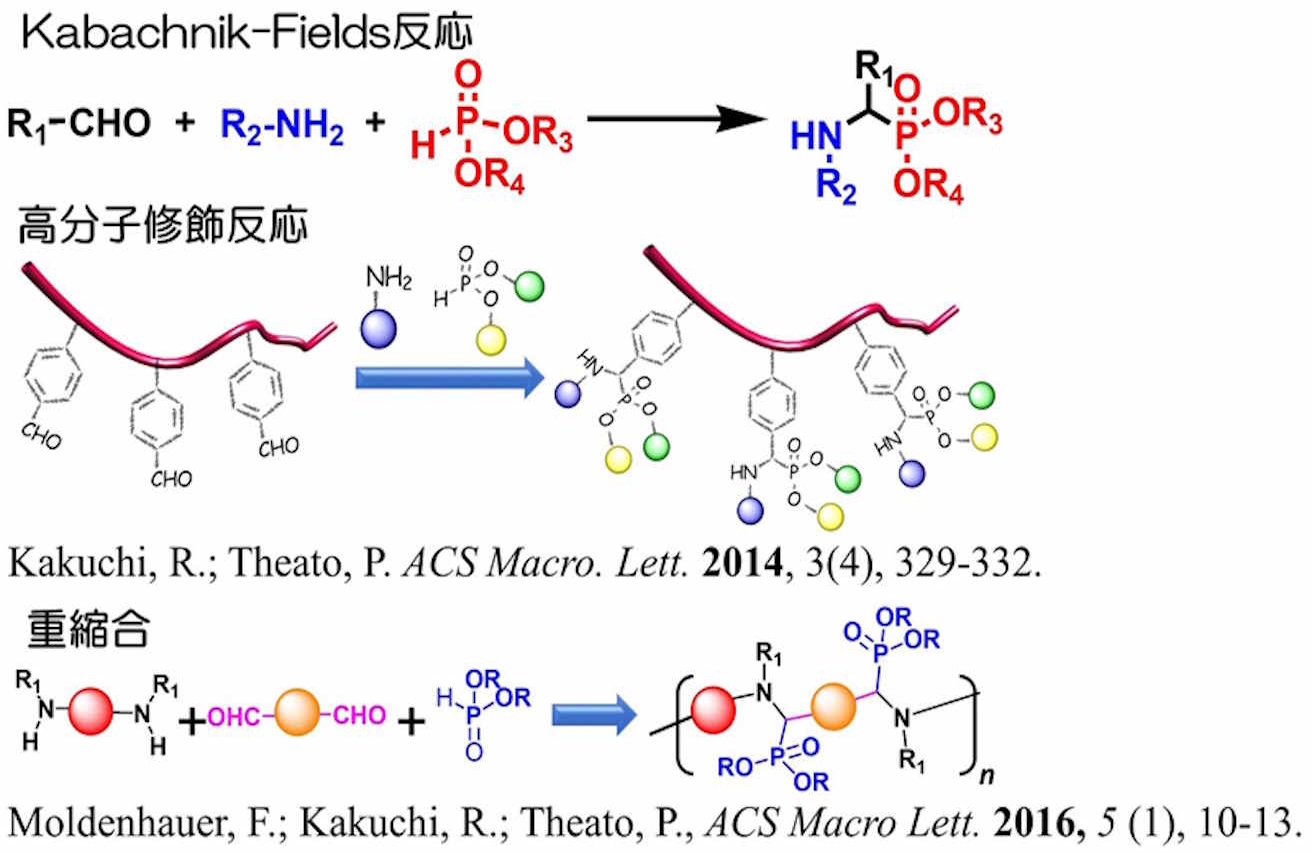
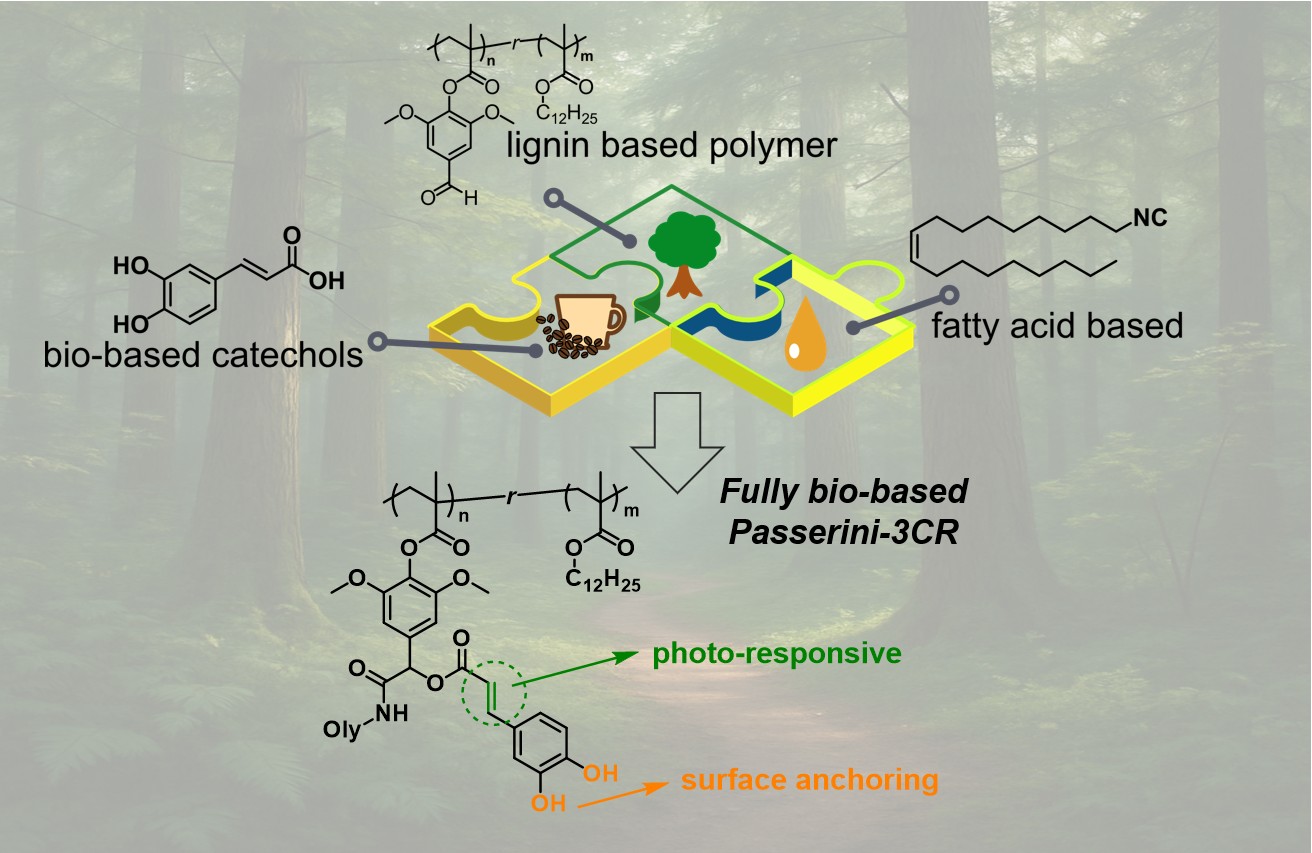
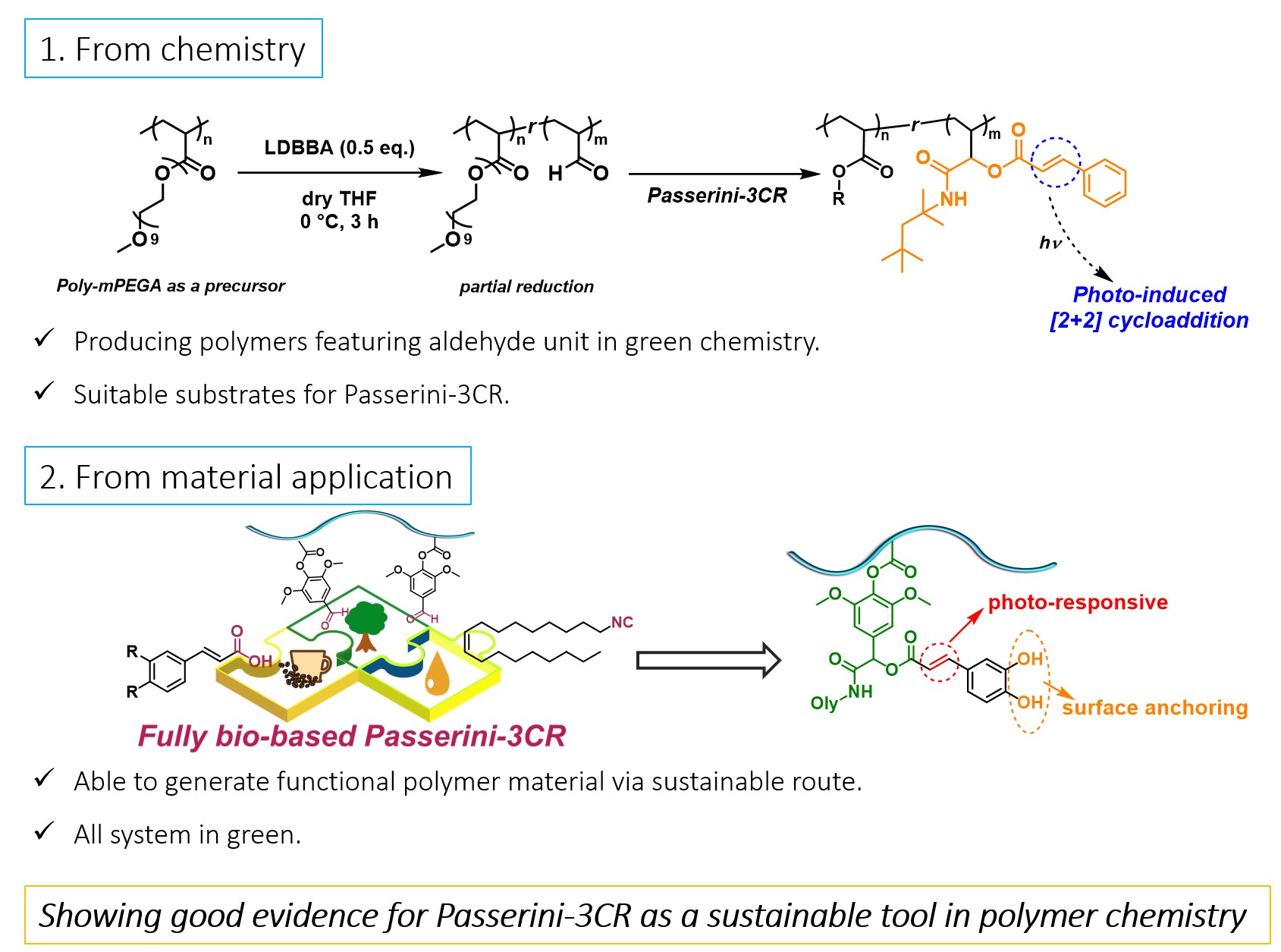
Multicomponent reactions (MCRs) involve the one-pot coupling of three or more reactants to generate a single product in a highly efficient manner.
Kakuchi, R*, "Multicomponent Reactions in Polymer Synthesis", Angew. Chem. Int. Ed. 2014, 53 (1), 46-48.
Although this reaction concept dates back to the early development of organic chemistry, beginning with the Strecker amino acid synthesis in the 1850s, its application to polymer science has expanded only in recent years.
Our research focuses on identifying MCRs that are compatible with polymer synthesis and exploiting their unique advantages to develop innovative polymeric materials and synthetic methodologies.
Through this approach, we aim to establish sustainable and atom-economical routes to next-generation functional polymers.
For more information, please refer to the review articles listed below.
Kakuchi, R*, "The dawn of polymer chemistry based on multicomponent reactions", Polym. J. 2019, 51, 945-953.
②Surface Functionalization of Polymeric Materials

-
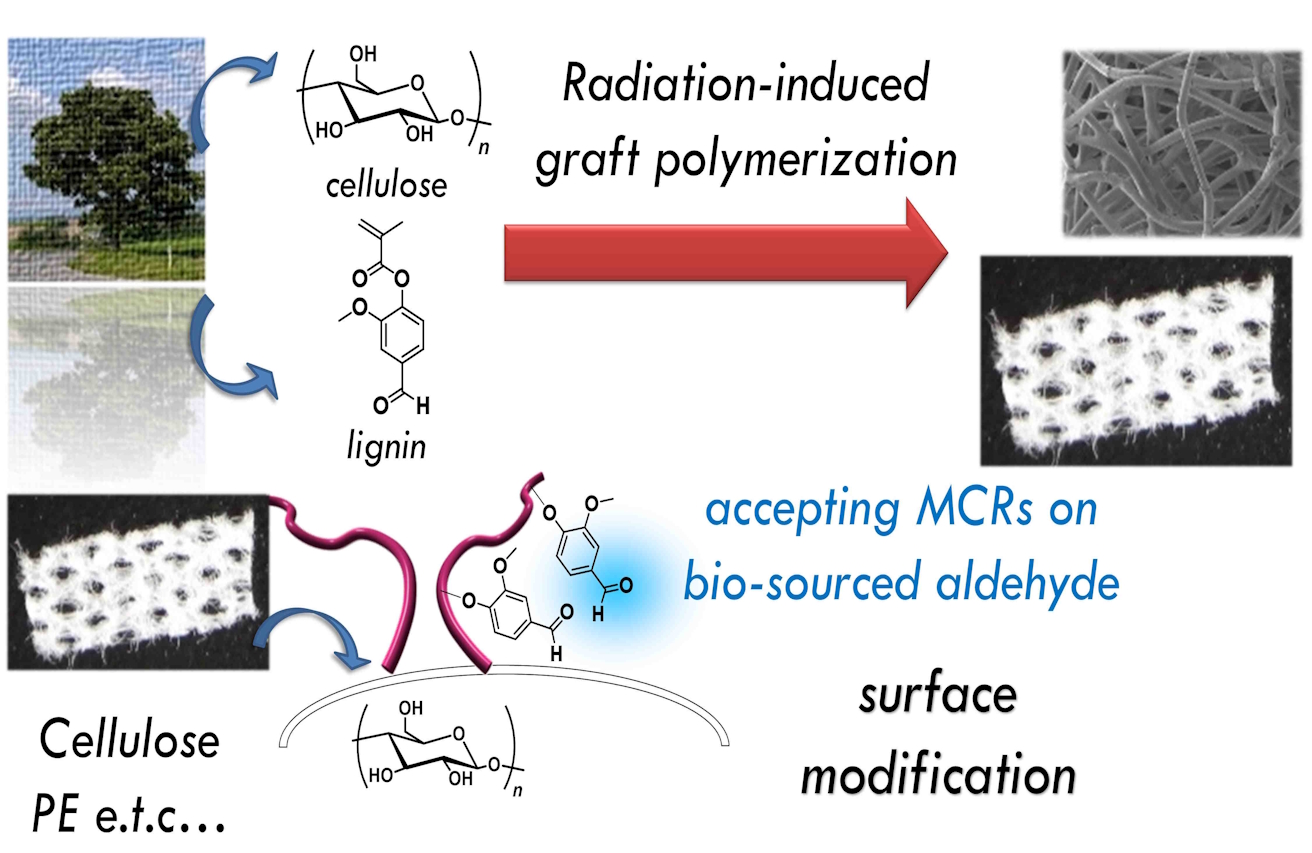
In collaboration with the Department of Advanced Functional Materials Research at the Takasaki Institute for Advanced Quantum Science (QST) , our laboratory is developing novel surface-functionalization strategies for polymeric materials by combining Radiation-Induced Graft Polymerization (RIGP) technologywith bio-based resources.
Kakuchi, R.*; Tsuji, R.; Fukasawa, K.; Yamashita, S.; Omichi, M.; Seko, N.*, Polymer Journal, 2021, 53, 523–531.
More recently, we have successfully developed machine-learning models for radiation-induced graft polymerization using chemically interpretable material descriptors. These models enable a deeper understanding of reaction behavior and provide accurate predictions of polymerization performance.
For further details, please refer to the publications listed below.
Matsubara, K.; Nirazuka, T.; Takahashi, K.*; Matsuda, T.; Kuroiwa, M.; Omichi, M.; Seko, N.*; Kakuchi, R.*, Materials Today Chemistry, 2025, 45, 102610.
③Advanced Polymer Reactions Involving Fluorine

-
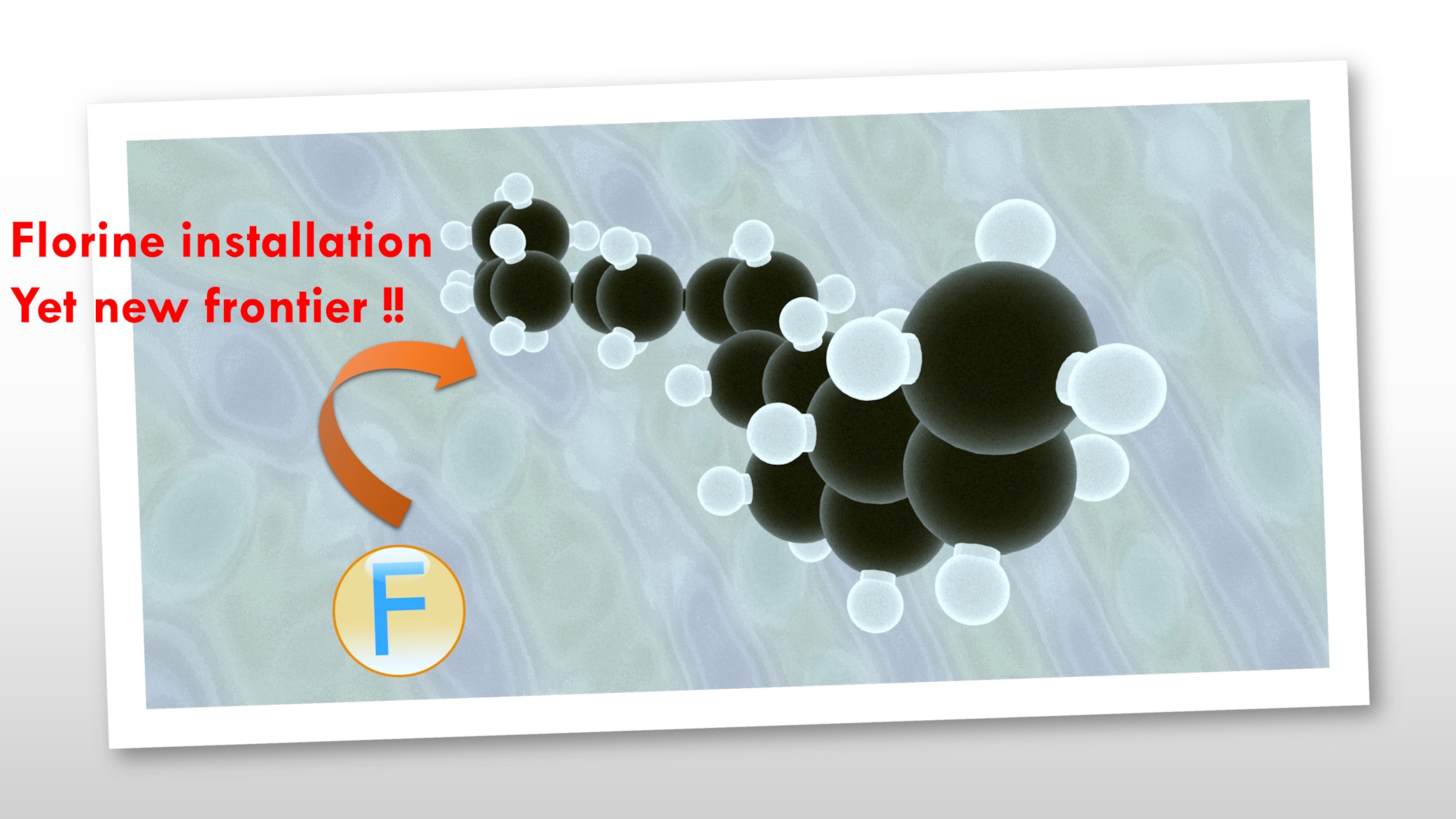
Fluorine is one of the most unique elements because of its small atomic radius and exceptionally high electronegativity.
Kasai, K.; Amii, H.; Kakuchi, R.*, Polym. Chem. 2024, 15, 4622-4626.
As a result, the incorporation of fluorine into polymers can dramatically alter their reactivity and fundamental physicochemical properties.
However, these unique characteristics also make fluorination reactions synthetically challenging. To address this issue, our laboratory collaborates with the Laboratory of Organic Synthesis Chemistry (Amii Group, Gunma University) to develop novel polymer syntheses that exploit the distinctive properties of fluorine-containing compounds.
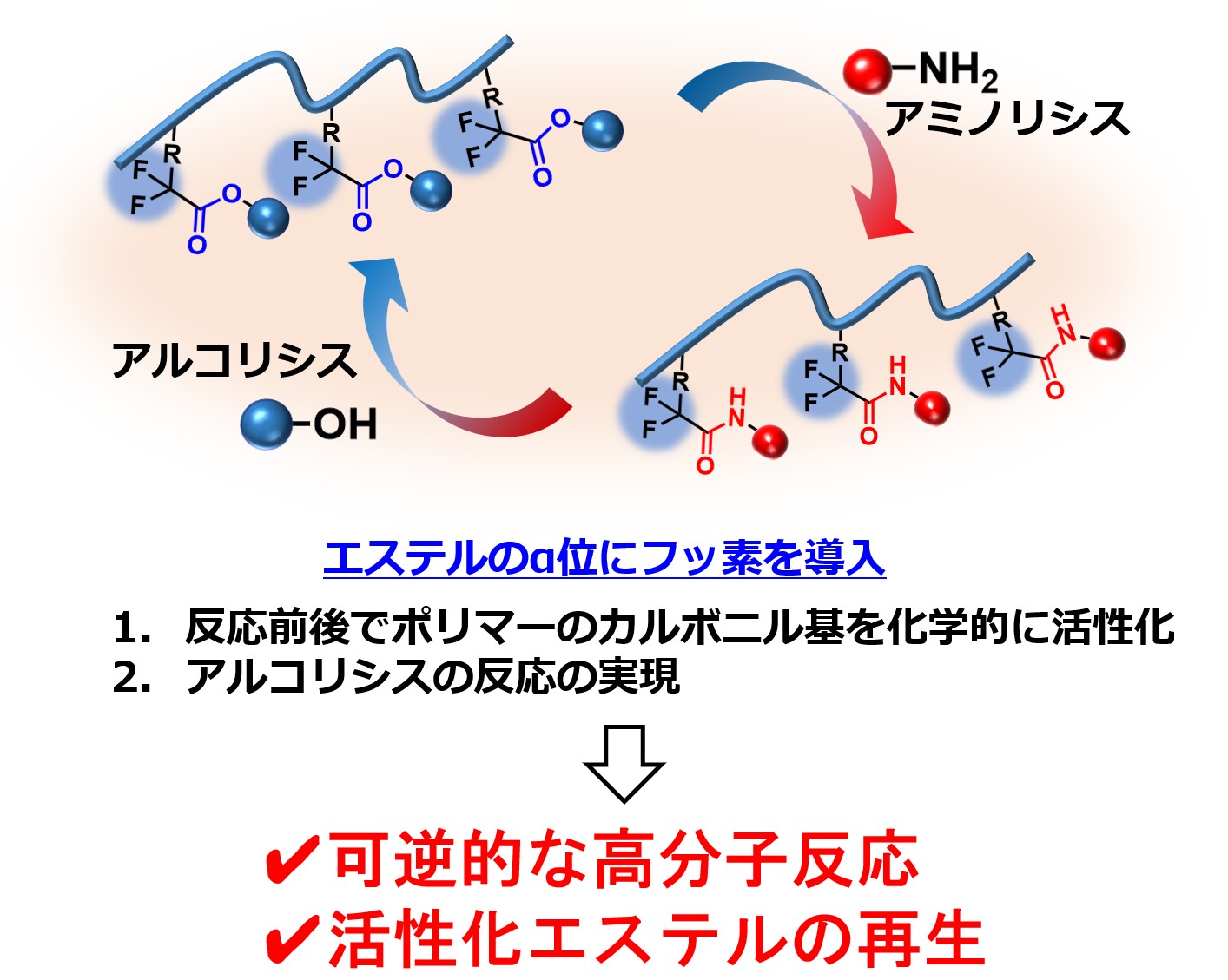
Recently, through mechanistic studies based on quantum chemical calculations, we successfully achieved the reversible aminolysis of fluorinated polymers and clarified the origin of their unique reactivity.
For further details, please refer to the publications and review articles listed below.
Kakuchi, R.*; Kasai, K.; Matsubara, K.; Amii, H., Polym. Chem. 2026, 17, 511-517.
④Sustainable Materials from Biomass Resources

-
In recent years, increasing concerns over the depletion of petroleum resources and the associated rise in costs have accelerated interest in the utilization of renewable bio-based resources.
Our laboratory focuses on naturally occurring polysaccharides and develops structurally controlled chemical transformations through advanced polymer-reaction methodologies. Through these studies, we aim to create novel functional materials derived from sustainable biomass resources.
In collaboration with Habil. Dr. Issei Otsuka and colleagues at CNRS–CERMAV (France) , we investigate the functionalization of these materials and explore their potential applications in a wide range of advanced material systems.
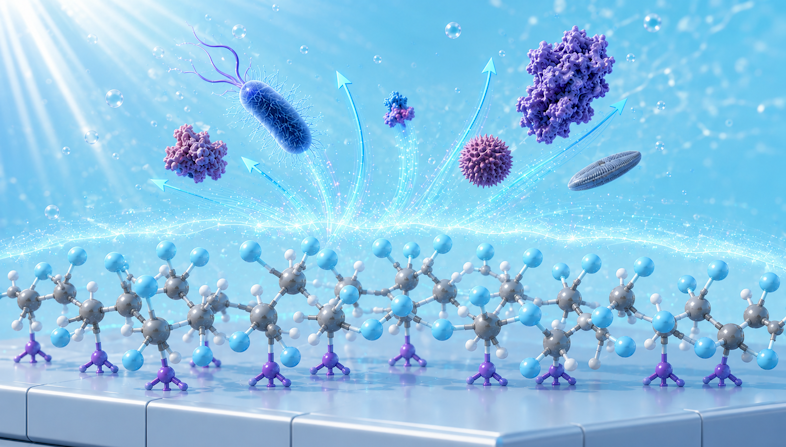
⑤ Development of Novel Zwitterionic Polymers
-
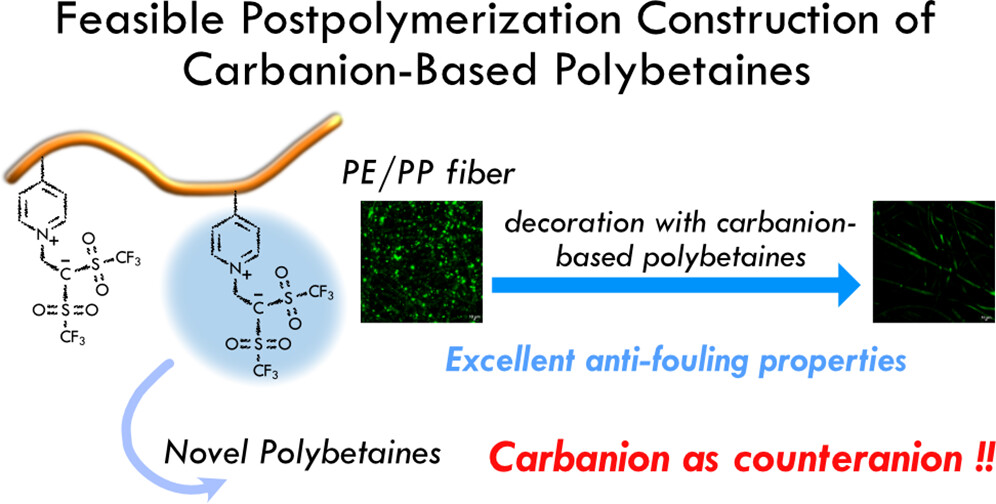
In collaboration with Associate Professor Hikaru Yanai and colleagues at Tokyo University of Pharmacy and Life Sciences , we are developing novel zwitterionic polymers with advanced functionalities by combining their molecular design strategies with our polymer-transformation technologies.
Kakuchi, R.*; Oguchi, T.; Kuroiwa, M.; Hirashima, Y.; Omichi, M; Seko, N; Yanai, H.*, Chem. Sci. 2024, 15, 19322-19372. Kakuchi, R.*; Oguchi, T.; Omichi, M.; Seko, N.; Dizon, G.; Chang, Y.*; Yanai, H.*, Macromolecules 2026, 59(5), 2698-2705.
In addition to material fabrication through collaborative research with the Dr. Seko group in QST , we are also evaluating the performance of these zwitterionic polymers in collaboration with the The R&D Center for Membrane Technology at Chung Yuan Christian University (Taiwan) .
Through these domestic and international collaborations, we aim to establish next-generation functional materials based on zwitterionic polymer platforms.
For further details, please refer to the publications listed below.